
7 Things Houston Homeowners Must Know Before Building a Backyard Tennis Court
Since 1997, Sportscapers Construction, Inc. has been the silent partner behind some of the most impressive private sports courts in the Greater Houston area. We’ve seen it all: from the sprawling estates in Memorial to the pristine manicured lawns of Sugar Land. But building a tennis court in Houston isn’t as simple as clearing some grass and pouring a slab of concrete.
Houston presents a unique set of challenges. We have expansive clay soil that moves like a slow-motion ocean, humidity that can trap heat, and local regulations that can stop a project in its tracks if you aren't prepared. A private tennis court is a significant investment: typically ranging from $25,000 to $120,000 for a high-end residential package: and it requires an engineering-first mindset.
If you are looking to create a backyard sanctuary that doubles as a pro-level training ground, here are the seven things you need to know before you break ground.
1. Zoning, Setbacks, and the HOA Gauntlet
Before the first shovel hits the dirt, you have to clear the legal hurdles. In Houston’s premier neighborhoods, your Homeowners Association (HOA) often has more say over your backyard than the city does.
Most municipalities and HOAs have strict "setback" requirements: rules that dictate how close a structure can be to your property line. Furthermore, "impermeable surface" ratios are a major factor. If your lot is already heavily occupied by a pool, outdoor kitchen, and large home, adding a 7,200-square-foot tennis court might push you over the allowable limit for non-porous surfaces.
At Sportscapers, we handle the heavy lifting here. Our process involves a 3D architectural visualization phase, where we help you see how the court fits into your overall backyard flow while ensuring we remain compliant with local codes.
2. Soil Engineering: The "Houston Gumbo" Problem
In Houston, the soil is primarily expansive clay. When it rains, it swells; when it’s dry, it shrinks. If you hire a standard residential concrete contractor who treats your tennis court like a driveway, that court will likely crack within two years.
We build our residential courts to what we call the "Sportscapers Standard": which is essentially over-engineering a school-grade facility for your home. This means proper site preparation, subgrade compaction, and often the use of post-tension concrete. Post-tensioning involves a grid of steel cables that are tightened after the concrete is poured, holding the slab in a permanent state of compression. This is the gold standard for preventing the cracks that plague Houston courts.
3. Drainage is Everything
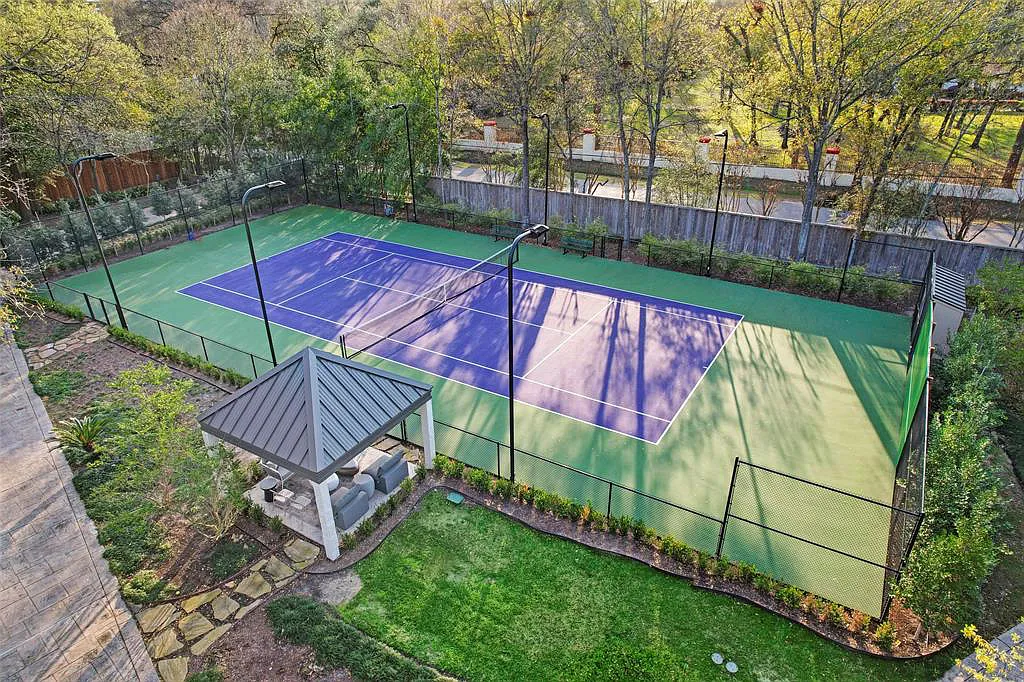
In a city that sees as much rain as Houston, drainage isn't just an "add-on": it’s the foundation of longevity. A regulation tennis court is a massive, flat surface that collects thousands of gallons of water during a typical Gulf Coast downpour.
Without a sophisticated drainage plan, that water will either pool on your court (damaging the surface) or wash out your landscaping. We engineer integrated systems, including perimeter French drains and catch basins, to ensure water moves away from the court and your home efficiently. We treat the court as part of a cohesive backyard sanctuary, ensuring the flow of water doesn't disrupt your pool area or outdoor living spaces.
4. Surface Options: Acrylic vs. Modular Tiles
Choosing a surface is about more than just color. You have to decide between the "traditional" feel and the "longevity" feel.
- Acrylic Surfaces: This is what you see at the US Open. It’s a multi-layered system applied over concrete or asphalt. It offers a true, predictable ball bounce and that classic pro-tour aesthetic. However, it is a harder surface on the joints.
- Modular Tile Courts: Often referred to as athletic courts or modular sports flooring, these systems use high-performance tiles that "float" over the concrete. They provide excellent shock absorption, which is a massive benefit for luxury fitness lifestyles and aging knees. They also stay significantly cooler than traditional acrylic in the 100-degree Houston sun.
Whether you want the crisp feel of an acrylic tennis court or the versatility of a multi-sport court, we help you choose the material that fits your family's style of play.
5. Lighting: Extend Your Training Time
In the fall and winter, it’s dark by 5:30 PM. For high-performing student-athletes or busy professionals, the only time to play is often after sundown.
We highly recommend directional LED sports lighting. Unlike the old-school metal halide lights that took 20 minutes to warm up and cast a yellow glow, modern LEDs provide instant-on, crisp white light. Crucially, we use directional optics to ensure the light stays focused on the court and doesn't spill into your neighbor's bedroom window: a common point of contention in high-density luxury neighborhoods.

6. Orientation and Fencing: Fighting the Sun and Wind
A common amateur mistake is building a court with an East-West orientation. If you do this, someone will always be staring directly into the sun during serves.
The professional standard is a North-South orientation. This ensures the sun moves across the court rather than down the length of it, providing consistent playability all day long.
Fencing is another critical consideration. In the Houston area, we design fencing that can withstand hurricane-force winds. We often use vinyl-coated chain link or high-end mesh that allows for airflow while keeping balls inside the "arena." We also consider wind screens, which provide privacy and a more consistent playing environment for serious matches.
7. The Turnkey vs. Multi-Contractor Trap
Building a backyard court is a complex construction project. Many homeowners try to save money by hiring a concrete guy, a fencer, and a painter separately. This almost always leads to a disaster where the fencer damages the concrete, or the painter realizes the slab isn't level enough for the coating.
Sportscapers Construction, Inc. is a fully turnkey builder. From the initial 3D visualization and HOA paperwork to the final net installation and landscaping, we manage the entire lifecycle. We bring the same engineering expertise we used for major facilities like Baseball USA and the Cotton Sports Complex to your private residence.
When you work with a legacy builder (established in 1997), you aren't just buying a court; you're buying a twenty-plus-year track record of durability.
Why Build Now?
Investing in a private sports court is about more than property value (though it certainly helps). It’s about creating a space where your kids want to be: where training happens in the driveway, and family bonding happens on the baseline.
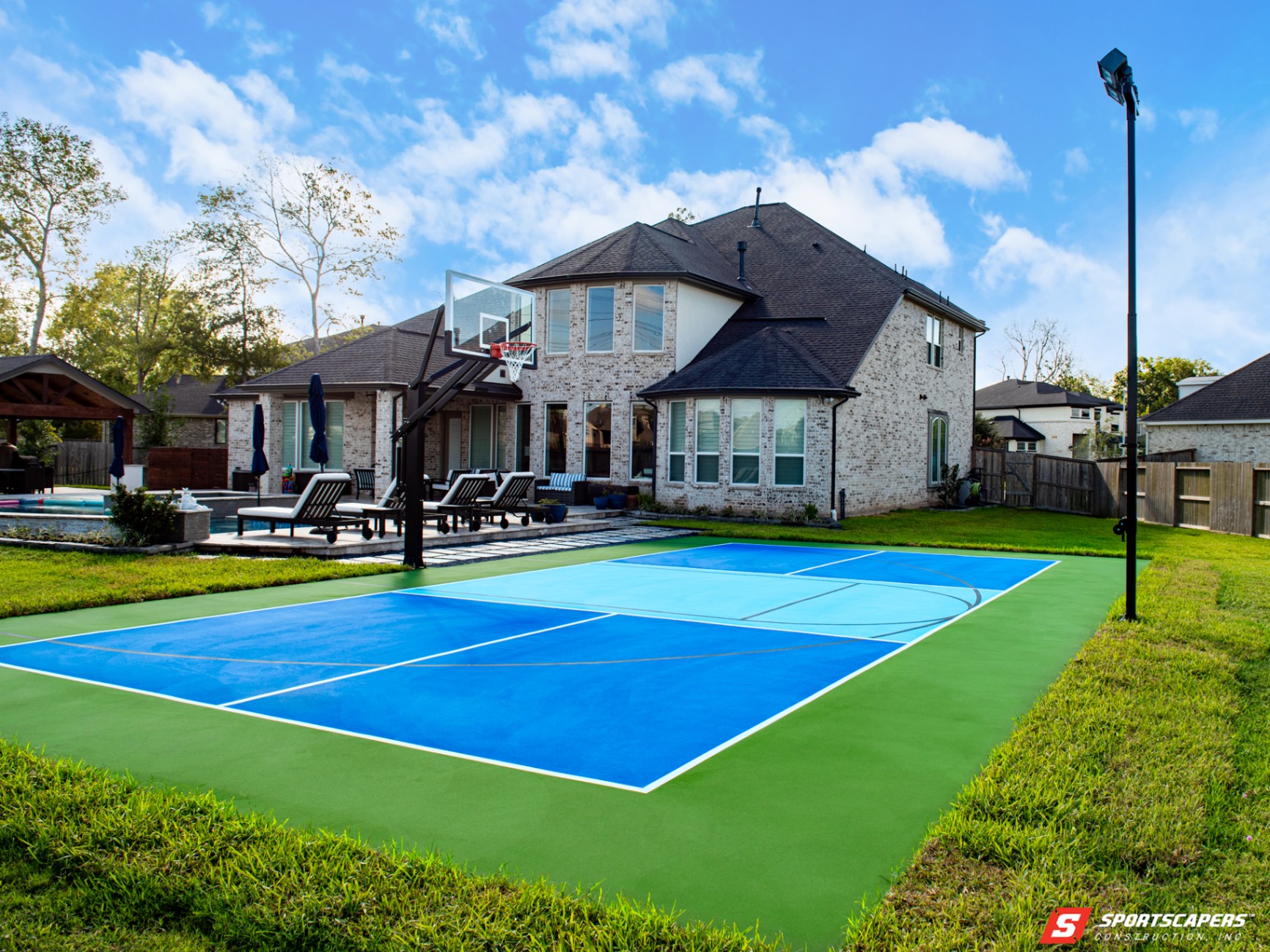
Whether you are looking for a regulation tennis court or a multi-purpose court that can host basketball and pickleball, the "Sportscapers Standard" ensures it’s built to last for generations.
Ready to start your transformation?
We offer professional design phases and high-end visualization at no charge for clients committed to a construction project. Let’s discuss how to turn your backyard into a world-class sanctuary.
Contact us today at: sales.sportscapers@gmail.com