
Tennis Court Conversions vs. Dedicated Pickleball Builds: Which Is Better For Your Houston HOA?
The meteoric rise of pickleball has transitioned from a trend to a permanent fixture in the American athletic landscape. For Houston’s premier Homeowners Associations (HOAs) and luxury estate owners, the demand for high-quality courts is no longer a peripheral request: it is a central requirement for property value and resident satisfaction. However, as the sun sets on underutilized tennis courts across the Greater Houston area, a critical engineering and financial question emerges: Should an HOA opt for a tennis court conversion, or is a dedicated pickleball build the only way to ensure long-term "Backyard Resort" quality?
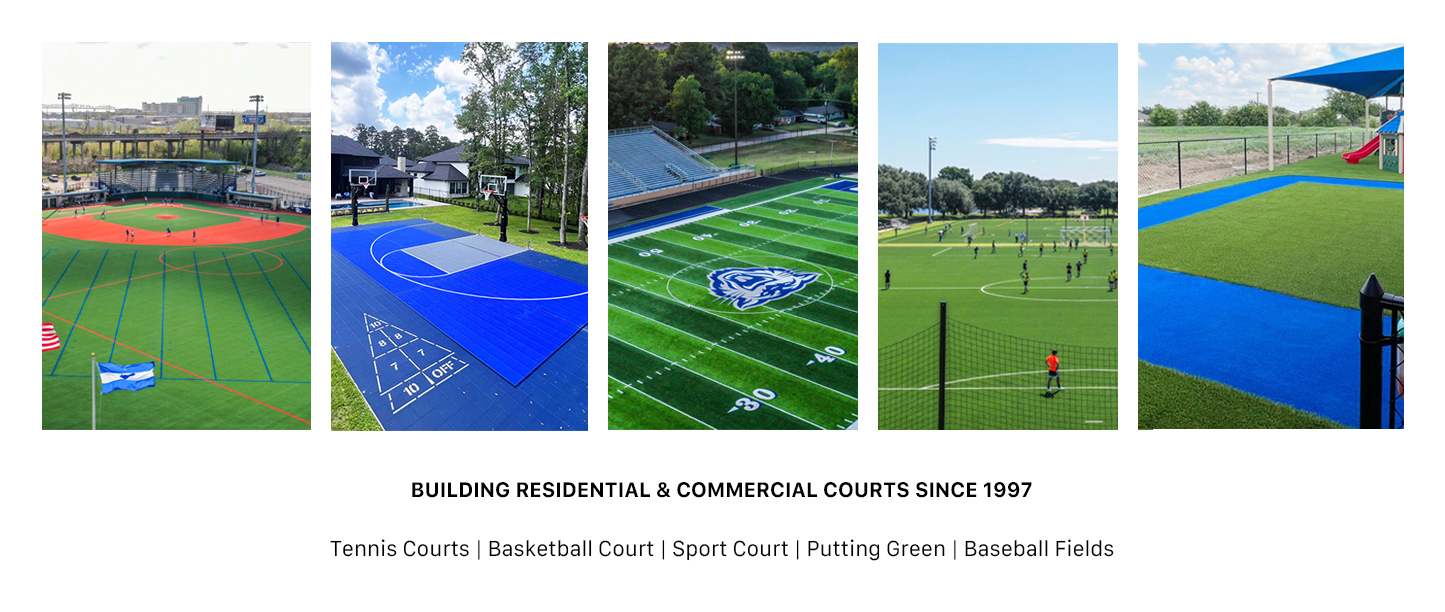
At Sportscapers Construction, Inc., we have spent 28 years: since 1997: navigating the complexities of Texas soil, drainage, and high-end athletic surfacing. When evaluating pickleball court construction in Houston, the decision rests on a pivot point between short-term cost savings and long-term asset integrity.
The Logic of the Conversion: Space and Speed
The most common approach for Houston HOAs facing aging infrastructure is the tennis court conversion in Houston. From a pure mathematical standpoint, the logic is compelling. A standard tennis court (60' x 120') can technically accommodate up to four regulation pickleball courts.
For communities where space is at a premium or where tennis participation has dwindled, resurfacing and re-striping offers a seemingly "quick win." This approach involves repairing the existing acrylic surface, filling cracks, and applying new color coatings and lines. It transforms a singular, quiet asset into a high-utility social hub.
However, the "quick win" often masks underlying engineering liabilities. A simple re-stripe does not account for the concentration of play. In pickleball, the movement is localized around the kitchen line, leading to accelerated wear patterns that a standard tennis court slab was never designed to endure.
Engineering Integrity: The Slab and the Soil
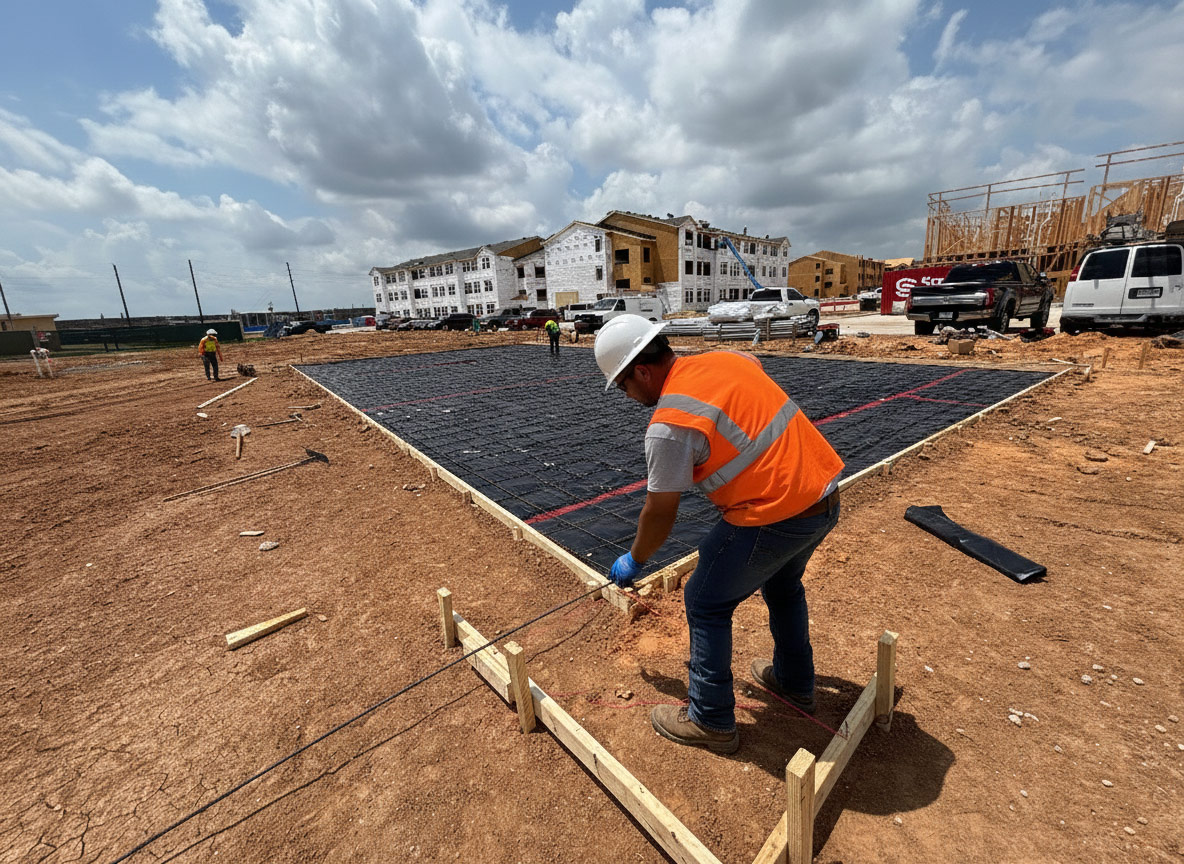
In Houston, the ground is rarely your ally. Our expansive clay soils exert immense pressure on concrete slabs. When Sportscapers Construction evaluates an existing tennis court for conversion, we look far beyond the paint.
Slab Integrity and Post-Tensioning
Many legacy tennis courts in Texas were built with rebar-reinforced concrete or, in older cases, simple asphalt. Over 20 years, these slabs inevitably develop structural "joint" issues or deep-settlement cracks. If you simply resurface over a failing slab, those cracks will telegraph through your new $30,000 pickleball surface within 18 to 24 months.
A dedicated pickleball build, by contrast, utilizes modern post-tensioned concrete. This is the "Sportscapers Standard." By tensioning steel cables within the slab, we create a monolithic structure that resists Houston’s soil movement. For an HOA, this is the difference between a 5-year maintenance cycle and a 20-year structural guarantee.
Drainage Dynamics
Pickleball players are eager; they want to be back on the court thirty minutes after a Gulf Coast thunderstorm. Tennis courts are typically graded with a 1% slope. When converting one large court into four smaller ones, the drainage paths often become obstructed by new net footings and fencing. A purpose-built construction allows for precision laser-grading and integrated drainage systems that ensure your "Backyard Resort" doesn't become a backyard pond.
The "Pickleball Noise" Factor and Sound Mitigation
Perhaps the most significant challenge regarding HOA pickleball court regulations is acoustic management. The "pop" of a pickleball paddle is significantly higher in decibels and frequency than the thud of a tennis ball. In high-density luxury developments, this can lead to immediate friction between active residents and those seeking a quiet afternoon.
When we design a dedicated pickleball facility, sound mitigation is part of the architectural phase. This includes:
- Strategic Orientation: Placing the courts in a natural depression or using existing landscape buffers.
- Acoustic Fencing: Utilizing specialized sound-dampening wraps that can reduce noise by up to 50%.
- Buffer Zones: Dedicated builds allow for a 50-to-100-foot setback from property lines, a luxury that existing tennis court locations may not afford.

The Backyard Resort: Turnkey Excellence
Whether for a private estate or a community amenity center, the goal is to create a "Backyard Resort" flow. A court should not look like a slab of concrete dropped into a field; it should be an extension of the home’s or clubhouse’s architecture.
Sportscapers Construction differentiates itself through a turnkey delivery model. We aren't just sub-contractors; we are builders who consult on the full landscape sanctuary. This includes:
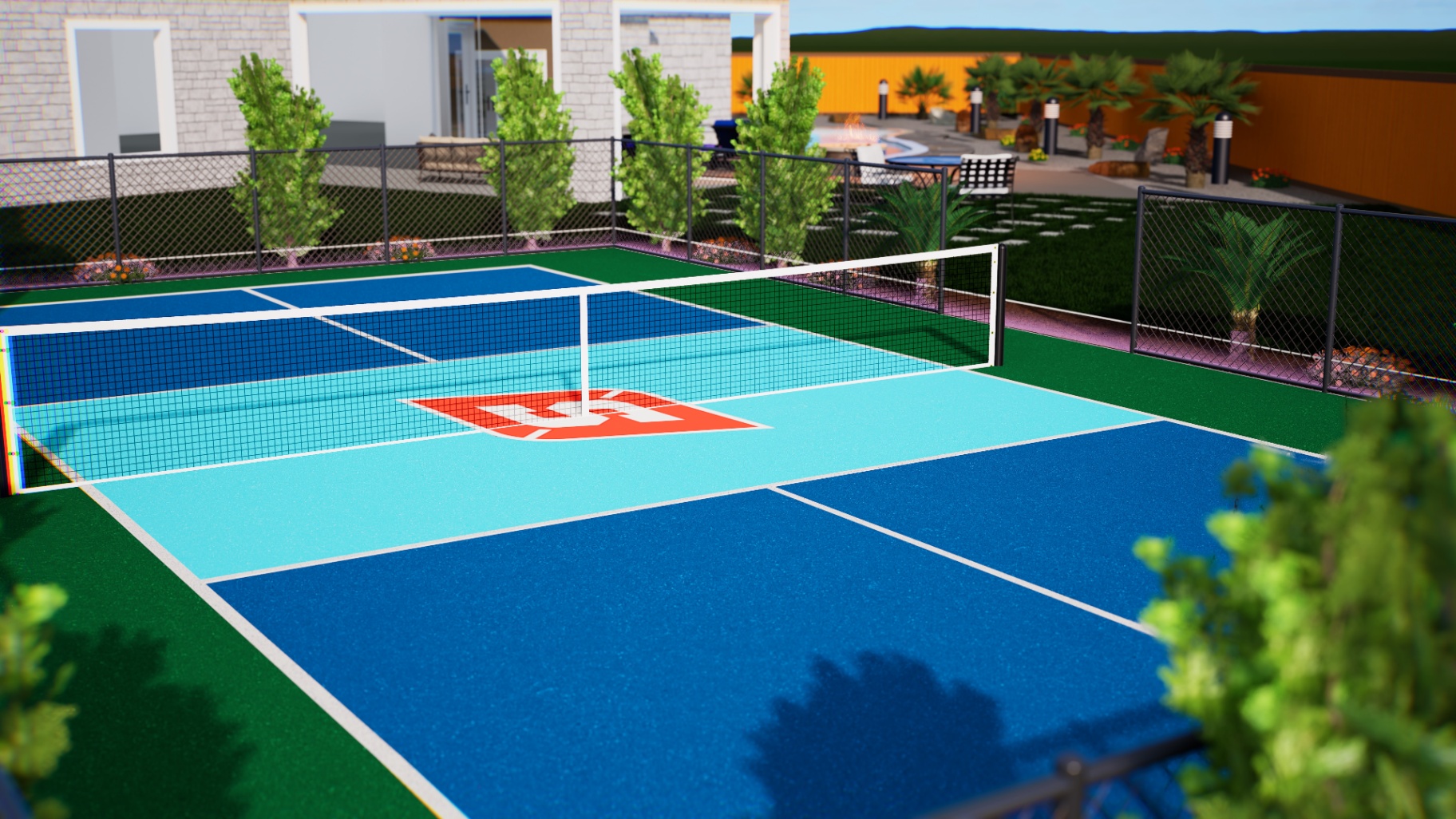
- 3D Architectural Visualization: Before a single yard of concrete is poured, we provide high-end 3D renderings that show how the court integrates with outdoor kitchens, professional landscaping, and existing structures.
- Directional LED Lighting: To maximize the investment, we install sports lighting that focuses illumination strictly on the playing surface, minimizing light spill into neighboring bedrooms.
- Turnkey Execution: From the initial permits and HOA board presentations to the final net tensioning, we manage every variable.
Financial Realities: Investment vs. Expense
Quality is a choice that reflects on the bottom line. Typical residential and HOA projects for a high-end pickleball installation range from $25,000 to $120,000.
- The Conversion Path ($25,000 – $55,000): Ideal for HOAs with structurally sound slabs that simply need a functional update. It is a cost-effective way to modernize an amenity.
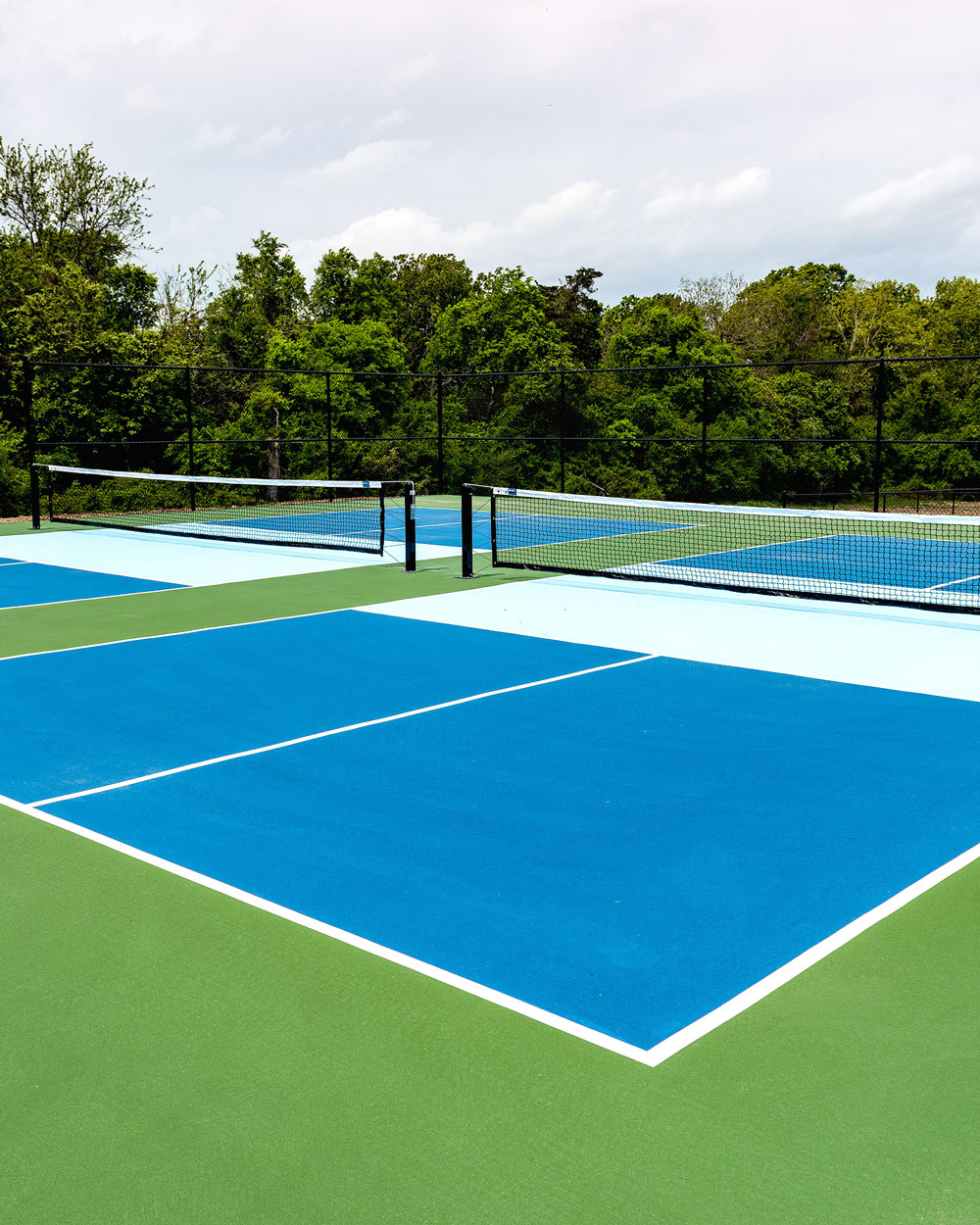
- The Dedicated Build ($60,000 – $120,000+): The choice for those seeking a legacy asset. This includes the "Champion" or "Estate" packages, featuring post-tensioned concrete, premium acrylic surfacing, professional-grade fencing, and integrated lighting.
While the conversion is cheaper upfront, the ROI on a dedicated build is often higher due to lower long-term maintenance costs and the significant boost to property values associated with "new construction" amenities.
Why the "Sportscapers Standard" Matters
There is a significant difference between a general contractor who "can do" a court and a specialized builder who has refined the craft over three decades. Our experience with large-scale projects: such as the Cotton Sports Complex and Baseball USA: informs the engineering we bring to every residential backyard. We treat your private court with the same structural rigor required by professional clubs and school districts.
We understand that for a Houston HOA, the "best" option depends on existing infrastructure and community goals. If your tennis courts are crumbling, a conversion is a band-aid. If your courts are pristine but empty, a conversion is a brilliant move. If you have the land, a dedicated build is the gold standard.
Questions to Ask Your Board
- What is the age of our existing tennis slab? If it's over 15 years old, a conversion may face structural failure.
- What is the proximity to residential windows? Sound mitigation must be a line item.
- Is the builder turnkey? Do not get caught between a concrete guy and a fence guy when the net footings are misaligned.
Final Thoughts: The Elite Choice
Pickleball is the new social currency of the Houston suburbs. Whether you are looking to revitalize a community center in The Woodlands or create a private sanctuary in River Oaks, the quality of the build is a direct reflection of the property’s prestige.
At Sportscapers Construction, Inc., we don't just build courts; we build the backdrop for family memories and community bonding. Our 28 years of Texas-bred expertise ensures that your investment is "over-engineered" for the Houston environment.
Ready to transform your community’s athletic offerings?
Contact Sportscapers Construction today at 281-213-3311 to schedule a professional consultation. Let us show you the difference between a painted slab and a true Backyard Resort through our signature 3D visualization and turnkey excellence.