
How Much Does a Backyard Basketball Court Cost in Houston? (2026 Guide)
If you’ve spent a summer in Houston, you know two things: the heat is relentless, and the passion for basketball never cools down. Whether your kids are dreaming of a college scholarship or you just want a private space to work on your jump shot without driving to the local gym, a backyard court is the ultimate home upgrade.
But as we roll through 2026, the question everyone asks first is: “What is this actually going to cost me?”
At Sportscapers Construction, Inc., we’ve been building these sanctuaries across Texas since 1997. We’ve seen the "budget" fly-by-night crews come and go, and we’ve seen the cracks (literally) they leave behind. Building a private sports court in Houston isn't just about pouring concrete; it's about engineering a structure that can survive Houston’s shifting gumbo soil and intense drainage requirements.
For a professional, turnkey residential project, you should expect an investment ranging from $25,000 to $120,000. Why such a wide range? Because a court in a River Oaks estate has different engineering and aesthetic needs than a quick-start half-court in a suburban cul-de-sac.
Let’s break down the components that move the needle on your investment.
1. Site Prep and Dirt Work: The Battle Against Houston Soil
In Houston, the ground is alive. Our expansive clay soil expands when it rains and shrinks when it’s dry. If your builder doesn't account for this, your court will be a topographical map of the Rockies within three years.
Site preparation involves more than just clearing grass. It includes:
- Excavation and Leveling: Removing the organic material and creating a perfectly level subgrade.
- Drainage Systems: Houston is prone to flash flooding. We engineer our courts to ensure water moves away from the playing surface and doesn't pond in your neighbor's yard.
- Soil Stabilization: Sometimes, we need to bring in select fill or use stabilization techniques to ensure the ground stays put.
The Cost Impact: This is where "cheap" builders cut corners. Skipping proper dirt work saves $2,000 now but costs you $30,000 in a full tear-out later.
2. Concrete Slab Engineering: The "Sportscapers Standard"
The slab is the heart of your backyard court. For a basketball court to play like a pro facility, the concrete needs to be perfect. We don't just pour a sidewalk-grade slab. We use high-PSI concrete mixes and specific reinforcement schedules.
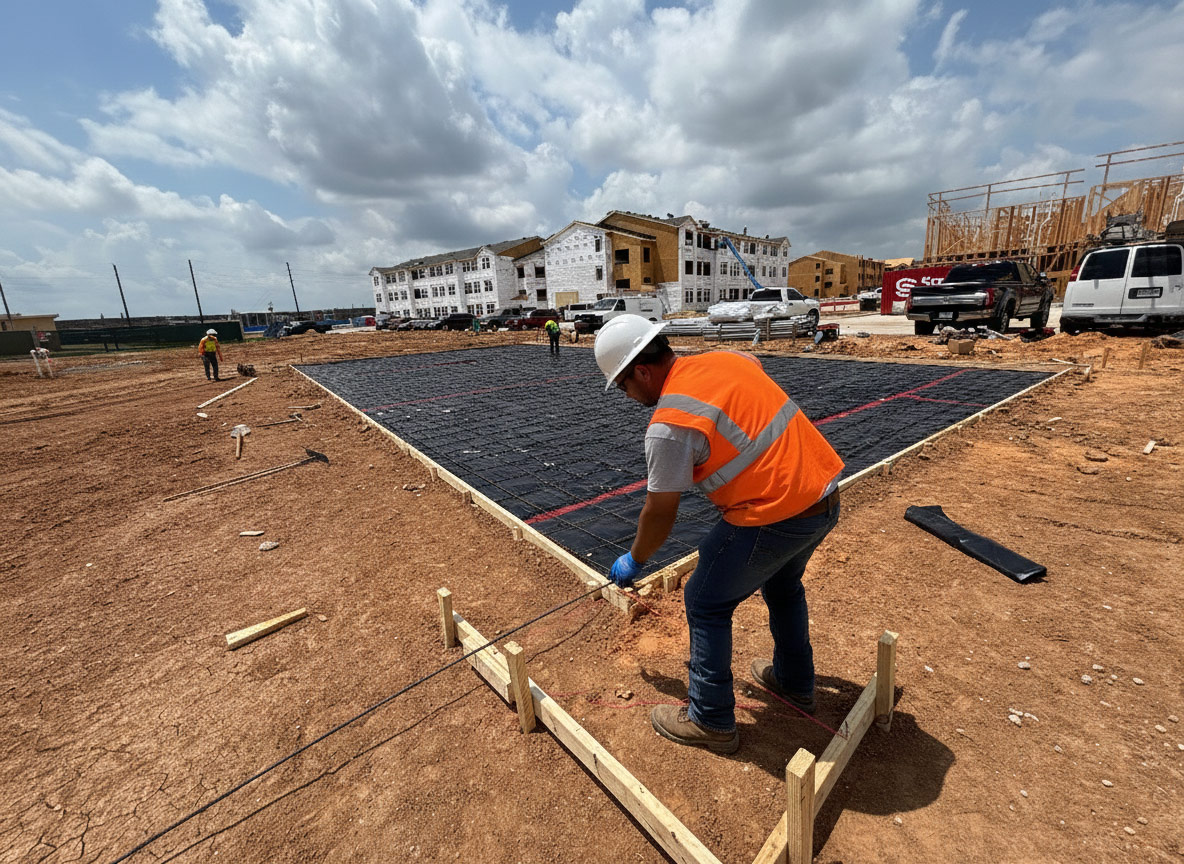
Many of our high-end projects in areas like The Woodlands utilize post-tension concrete. This is a technique where steel cables are tensioned after the pour, compressing the slab and virtually eliminating the structural cracks that plague standard rebar slabs in Texas.
What to look for:
- Vapor barriers: To prevent moisture from bubbling your surface.
- Slab thickness: A minimum of 4 inches, often reinforced at the edges.
- Finish: A medium broom finish or a specific smooth finish depending on your chosen top layer.
3. The Surface: Modular Tiles vs. Acrylic
Once the engineering is done, it’s time for the "play." You have two main routes:
Modular Athletic Tiles
These are the gold standard for residential play. High-performance modular tiles provide excellent traction and, most importantly, joint protection. The "vertical give" in these tiles saves the knees of both 10-year-olds and 40-year-olds. They also allow water to drain through them, meaning your court is playable minutes after a Houston thunderstorm.
Acrylic Systems
If you want that "hard court" feel like you see at the Toyota Center or on a pro tennis tour, an acrylic paint system is the way to go. This involves multiple layers of specialized coatings and textures. It looks sleek and professional but requires a perfectly engineered slab to prevent cracking.

4. The Components: Hoops, Lighting, and Fencing
This is where your court transforms from a slab into an arena.
- The Hoop: Forget the portable hoops from the big-box stores. A professional private sports court deserves an in-ground, adjustable glass backboard. These are heavy-duty, rust-resistant, and don't shake when the ball hits the rim.
- Lighting: In Houston, the best time to play is often after the sun goes down. We highly recommend directional LED sports lights. These extend your training time into the fall and winter and are designed to keep the light on the court, not in your neighbor’s bedroom window.
- Fencing: Whether it’s a full 10-foot perimeter or a simple ball-rebounder net, fencing keeps the game moving and protects your landscaping (and your neighbor's windows).
5. The "Legacy" Difference: Why Turnkey Matters
You can hire five different contractors to do the dirt, the concrete, the tile, the electrical, and the hoop. Or, you can hire a turnkey builder.
At Sportscapers, we handle the entire lifecycle. We provide 3D architectural renderings so you can visualize the full sanctuary, how the court flows into your outdoor kitchen, your pool, or your landscaping. For clients committed to a construction project, this high-end visualization is included.
Why does our 29-year legacy matter? Because we build "school-grade" quality for your backyard. When we build for organizations like Baseball USA or the Texas Tornados, we use the same engineering principles we bring to your home. We call it "over-engineered," but in Houston’s environment, it’s simply doing it right the first time.
Common Questions: The Quick-Fire Round
Does a backyard court increase home value?
In Houston’s luxury market, absolutely. High-end buyers in 2026 are looking for "wellness" and "activity" spaces. A professionally built, multi-sport court is a major differentiator.
How long does a build take?
Typically, a turnkey project takes 4 to 8 weeks from the moment we break ground, depending on the complexity of the drainage and HOA approvals.
What about HOAs?
We know the rules in Katy, Sugar Land, The Woodlands, and Cypress. We handle the permitting and the technical drawings required to get your project approved.
Can I use the court for more than basketball?
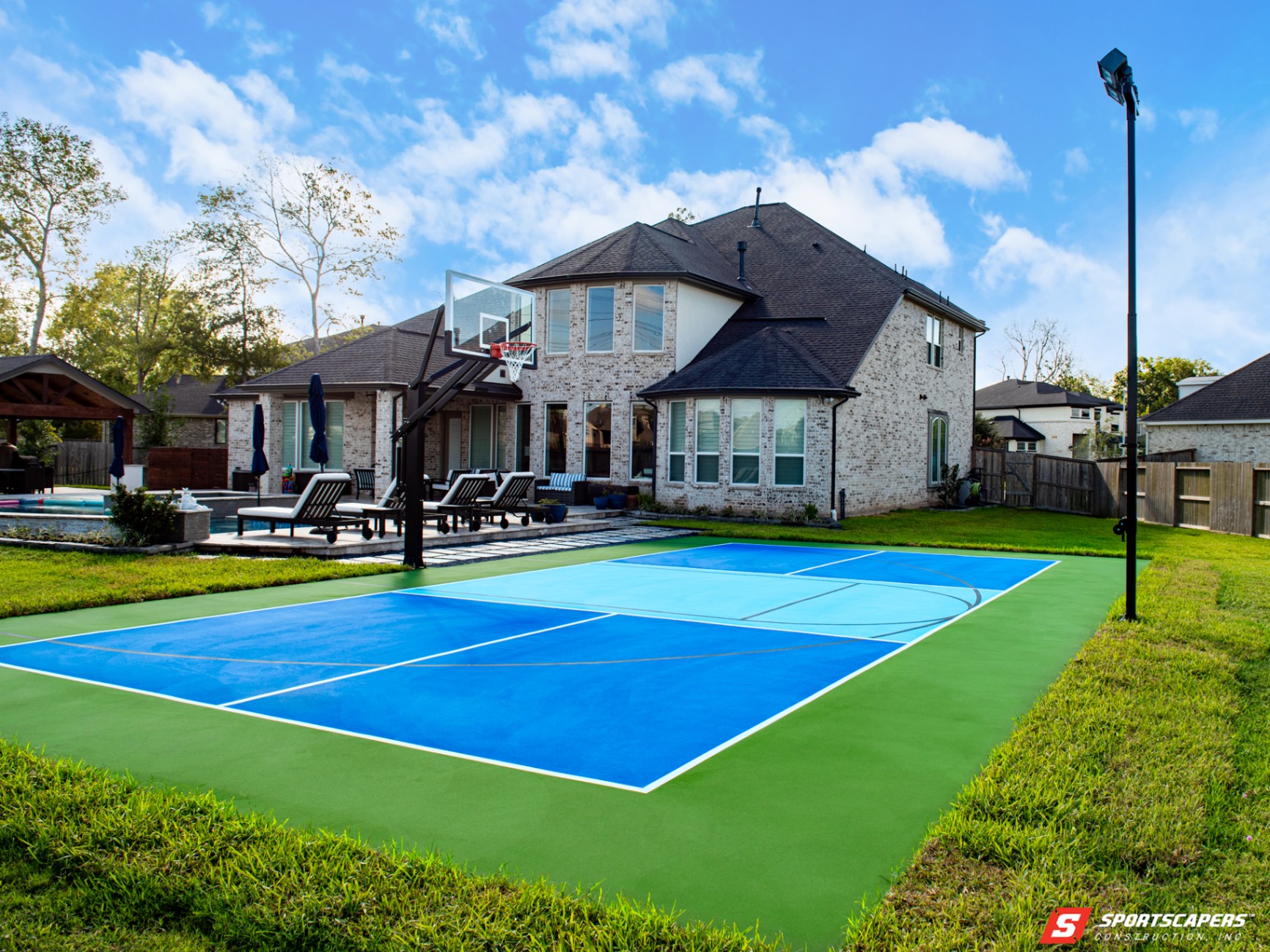
Yes! Most of our clients opt for a multi-sport court layout. By adding a few extra lines and an adjustable net system, your basketball court becomes a pickleball or volleyball arena.

The Bottom Line on Cost
A backyard court is a lifetime investment in your family’s health and your home’s utility. While a "quick-start" package might begin around $25,000, our Estate Packages: which include full engineering, lighting, and custom surfacing: typically range higher to ensure the court lasts as long as your home does.
If you’re looking for the cheapest price in town, we probably aren’t the right fit. But if you want a court that won't crack, won't flood, and will provide a pro-level training environment for your athletes, we’re the only call you need to make.
Ready to start your 3D design phase?
Reach out to our team at sales.sportscapers@gmail.com to discuss your vision. Let’s build something that stays in your family for generations.
Summary of Component Costs (Estimates for 2026)
| Component | Estimated Range | Details |
|---|---|---|
| Site Prep / Dirt Work | $3,500 – $10,000+ | Depends on slope and soil condition. |
| Concrete Engineering | $8,000 – $25,000+ | Post-tension vs. Rebar; PSI specs. |
| Surfacing (Modular/Acrylic) | $7,000 – $20,000+ | Based on square footage and performance grade. |
| Professional Hoop & Install | $2,500 – $4,500 | In-ground, adjustable, glass backboard. |
| LED Sports Lighting | $3,000 – $8,000 | Directional, high-output, neighbor-friendly. |
| Fencing & Accessories | $2,000 – $12,000 | Soft netting vs. steel chain-link. |
Note: Total project costs are influenced by local permitting, HOA requirements, and specific site challenges common in the Houston area.